ISSN: 1550-7521
ISSN: 1550-7521
Shukrullah Aadil* and Amanpreet Randhawa
Department of Journalism and Mass Communication, Punjabi University, Patiala, Punjab, India
Received: 04-Dec-2024, Manuscript No. GMJ-24-154178; Editor assigned: 09-Dec-2024, PreQC No. GMJ-24-154178 (PQ); Reviewed: 24-Dec-2024, QC No. GMJ-24-154178; Revised: 04-Feb-2026, Manuscript No. GMJ-24-154178 (R); Published: 11-Feb-2026, DOI: 10.36648/1550-7521.24.79.531
Citation: Aadil S, Randhawa A (2026) War on Misinformation: Insights from Afghanistan Journalists. Global Media Journal, 24:79.
Visit for more related articles at Global Media Journal
Misinformation, disinformation, and fake news have become pervasive challenges in modern media landscapes, particularly in regions with political instability. This study investigates the impact of misinformation on Afghanistan's media sector, focusing on the unique challenges faced by Afghan journalists under Taliban rule. Using a mixed methods approach, including a survey of 30 journalists and an analysis of 24 fact-checked articles, the research examines the spread of false information and the socio political factors driving it. Key findings reveal that limited press freedom, internet access restrictions, and threats of violence significantly hinder journalists' ability to report accurately. The rise of social media as a major misinformation tool, combined with inadequate journalistic resources and training, further exacerbates the issue. Additionally, government control and censorship have fostered an environment where propaganda thrives, eroding public trust. The study underscores the urgent need for enhanced media literacy, international collaboration, and targeted training programs to strengthen fact-checking capabilities and journalistic integrity. It highlights the resilience of Afghan journalists while calling for sustained support to combat misinformation and uphold democratic principles in Afghanistan's evolving media landscape. This research contributes to understanding how misinformation operates in politically fragile contexts and proposes strategies to decrease its impact.
Afghanistan media; Digital media; Misinformation; Fake news
Misinformation is a significant problem for democracies as exposure to it tends to mislead people. This interferes with making informed decisions despite the fact that disinformation is a global concern, different approaches are needed depending on the region, culture, socioeconomic setting, and political climate. Since the beginning of civilization and the establishment of organized communities, disinformation has existed in human communication. However, the scope and speed at which inaccurate or misleading information can spread through social media and new technologies to both intended and unintended audiences has evolved in recent years. Public harm could result from this [1]. ‘Fake news’ is not new. Actually, "disinformation wars" have a history that goes all the way back to ancient Rome. However, knowledge has become a weapon on an unparalleled scale in the twenty-first century. Newly developed technology makes content manipulation and fabrication easy, and social media greatly magnifies the lies propagated by populist politicians, anti-democratic governments, and dishonest business groups [2]. Disinformation-misinformation campaigns and fake news are major issues in modern democracies. In contrast, the majority of scholarly contributions have concentrated on the political and epistemological implications.
Definitions of false or fake news vary and contain ‘satire, parody, fabrication, manipulation, propaganda, and advertising’. Although the fake news was supposed to be understood by the audience, it is now frequently used to characterize articles which have no factual basis but are published in the style of news articles to create legitimacy" [3]. Fake news has taken over the internet in recent years. On social media, fake news writers may easily and affordably spread misleading information, garnering thousands of comments, share and likes. many false news even becomes popular and becomes a "trend" on specific platforms. The ease with which a publisher can produce and publish lies has resulted in an unprecedentedly large and powerful disinformation business.
Figure 1 shows three types of information: Misinformation, disinformation and malinformation. Misinformation occurs when someone spreads incorrect information under the guise of believing it to be true, disinformation meant to influence, damage, or lead individuals, groups, and nations in the wrong way is referred to as false information, malinformation is based on reality but it is utilized to cause offend on a person, organisation or country [4].
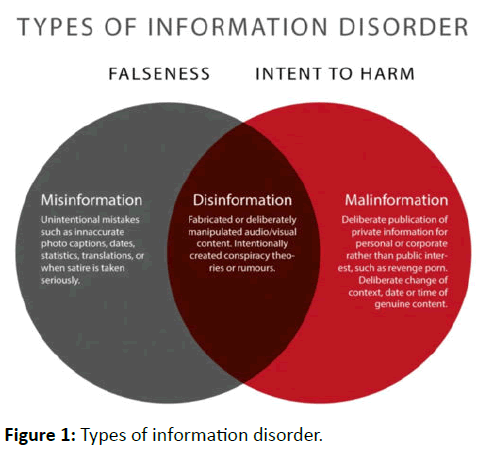
Figure 1: Types of information disorder.
By building on a few anecdotal stories, the news media greatly exaggerated the public's reaction to the war of the Worlds radio broadcast, creating the impression of widespread hysteria [5]. People hold wrong beliefs, and do so confidently is one definition of misinformation [6]. A lot of studies have focused on “inaccurate beliefs,” without answering the query of how certain they are in these beliefs [7].
UNHCR define; Misinformation is false or erroneous information for instance pranks, insults, and rumors. The dissemination of reliable information that conforms to professional norms and ethics, as well as the quality of journalism, are incompatible with misinformation. However, misinformation and disinformation are not new; rather, they have grown more common as a result of new technology and the quick internet spread of news and information. As a result, digitally fueled misinformation and disinformation run the risk of overshadowing truthful media, particularly in polarized environments [8].
UNESCO added that to guarantee the right to freedom of expression and prevent overly broad legislative measures from criminalizing this type of speech, societies are increasingly adopting social, educational, and technical strategies to counteract misinformation. Therefore, addressing the ecology of disinformation and misinformation necessitates a careful evaluation of the motivations behind the creation of media and information literacy campaigns and the distribution of such content. MIL is often suggested as a strategy to counteract misinformation, MIL offers the skills and resources necessary to stop the transmission of misleading information and to thwart the efforts of individuals who propagate hate and dishonesty as well as the digital business models that magnify such content and the relationships between those who provide it [9]. To counter misinformation, governments, journalists, fact-checkers, schools, and other organizations have adopted a variety of measures and adopted specific tactics worldwide. Below, we outline the many strategies being used to address the issue at hand, using UNESCO resources, it is divided into five sections that adhere to the five laws of MIL, the laws of MIL are first criticized; then, the first part is placed in perspective by a particular social context; MIL laws is then presented in response to international feedback on the first two; and lastly, issues of mutation, readers, space and staff are discussed in order to expose the themes to additional experiences that enhance the addressed.
Figure 2 highlights UNESCO’s five laws of MIL:
• Communication, information, media, libraries, Internet and technology the all-support critical public engagement and sustainable development and maintain same importance.
• All individuals contribute to knowledge and information, and they must have the freedom to access and express it. Media and Information Literacy (MIL) supports universal human rights.
• Information and knowledge are not always neutral. MIL should empower individuals to recognize and navigate biases.
• People have an inherent desire to understand and communicate information; their right to do so must be protected.
• MIL is a continuous process, involving access, measure, use, creation, communication of content and building knowledge, skills, and attitudes.
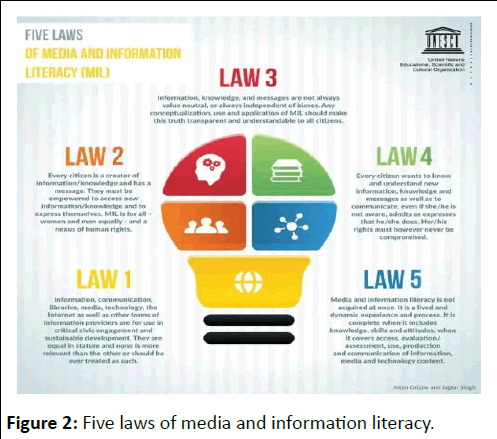
Figure 2: Five laws of media and information literacy.
Fact-checking; As early as the 1980’s, fact-checking was being done in American newspapers to validate political assertions. Reagan asserted during his presidential campaign that pollution from trees was four times greater than that from cars. Reporters started confirming press conferences and televised pronouncements made by Reagan after he was elected president, frequently including a sidebar in their coverage of him, but the trend was short-lived. In the 1990’s, journalists validated the claims in political commercials through "Adwatch" reports as part of fact-checking practices. Computational approaches; scholars from various fields have suggested using algorithms and computation to fight misinformation. For example, a team of academics, mostly from the University of Texas at Arlington, created an end-to-end fact checking way called ClaimBuster that automatically identify actual statements that are worthy of verification and cross-reference it with previously verified claims or knowledge bases.
Fach-checking and journalistic values
Prominent academics and professionals publish comprehensive lists of both objective and subjective ethical norms that characterize excellence in journalism. When it comes to fact-checking, political journalists and the organizations that hire them imitate high-level procedures in their industry, adopting novel ideas that have been acknowledged by experts as preserving the standards of the profession. Furthermore, factchecking is recognized as an additional and distinct task from that of a beat reporter. Fact-checkers are able to examine a topic or even a single statement in great detail. We can provide a thorough explanation of how a politician supports their claim and whether there is any factual basis for it. Numerous nations have taken action to counteract misinformation since it has caused harm individuals all across the world. For instance, the European Council directed the establishment of the EU East Strat Com Task Force in 2015 as a propaganda counter organization in response to Russia's misinformation efforts. Since its founding, the organization has disproved thousands of cases. In an effort to dispel false information, the Chinese government has adopted an outreach to the public strategy. Two million persons were active in online content monitoring, according to a 2014 report.
Given this theoretical framework, internal disarray in factchecking procedures is not surprising. In the realm of journalism studies, the worldwide event of fact-checking has been called a "rare example of a genuinely transnational movement," while also noting that national methods vary greatly from one another.
Conflicts over fact-checking arose in the journalism industry as a result of the ambiguity surrounding objectivity. Factchecking has been adopted by numerous news organizations worldwide, and academics have characterized it as a "genre of journalism" that fulfils fundamental journalistic responsibilities including giving correct information and monitoring power. However, detractors contend that by evaluating statements, fact-checking transgresses the conventional objectivity norm. In order to safeguard journalists and news organizations from "occupational hazards such as libel suits," news organizations have been refraining from deciding claims for decades.
Although, MIL is important for recognizing and preventing fake new and dissemination of misinformation. The three concepts of MIL, and digital literacy are the most widely accepted and stress a critical attitude to media communications, media literacy, digital literacy and information literacy are important components of media education.
Committee to protect journalists highlights how Talibanimposed limitations have made it harder for misinformation and false news to circulate, with journalists now frequently working in a fear-based and self-censoring environment that makes it harder to refute falsehoods.
Intern news highlights how poor journalistic practices, including inadequate fact-checking, reliance on unverified sources, and sensationalism, contribute to the disseminate of misinformation in Afghanistan media outlets, especially those reliant on donor funding, prioritize engagement through clickbait and emotional content, often at the expense of accuracy. This weakens media credibility and worsens public trust.
Aïmeur et al., discussed dis-misinformation and fake news in social media: A review, they stated that Online social networks have become a main source of news worldwide, offering unparalleled connectivity and instant information sharing. However, this accessibility brings significant challenges, notably the rapid published of misinformation.
identification remains difficult due to the deliberate design of false content to closely resemble truthful information, complicating detection efforts. This problem plagues current AI techniques, such as machine learning and deep learning; unfortunately, these same technologies are frequently abused to produce and disseminate fake news.
Afghan witness demonstrates how the Taliban's tough control over the media fosters the growth of misinformation. The Taliban frequently compels journalists to adopt endorsed narratives, leading to the propagation of false information. Violence occurrences, for instance, are frequently misreported, with victims being mistakenly identified as belonging to terrorist organizations such as ISKP. The difficulty of confirming information in this heavily controlled environment is also covered in the piece.
OHCHR concern over media outlets disseminating misinformation about human rights occurrences is raised. for instance, featured a campaign of smears during a UN conference on the rights of Afghan women, which was made worse by gendered misinformation.
Global Voices according to this report, misinformation has been used to inflame ethnic tensions in Afghanistan, especially in cases when it sparked rallies and acts of violence. The difficulties of false information on social media, particularly during delicate ethnic conflicts, are also covered in the report.
UNESCO described providing people with a critical thinking skill set to assess media content is seen to be one strategy to counteract the spread of misinformation by making them media literate. A set of abilities, mindsets, and information necessary for active engagement in the media-rich modern world is referred to as media literacy.
The aim of this research is to comprehend how the general public, journalists, and fact-checkers view the roles and responsibilities of misinformation in Afghanistan media. To achieve this, a multi-stakeholder approach was applied, incorporating both quantitative and qualitative research methods.
Research design
conducted a mixed-methods research design to comprehensively explore the perspectives of fact-checkers and journalists to analyse the patterns of misinformation. This design enabled the triangulation of data from different sources to enhance the depth and reliability of the findings.
Sampling
Questionnaire survey: A systematic sampling technique was used to select 30 journalists and fact-checkers actively engaged in covering or addressing war-related misinformation in Afghanistan. These individuals were chosen based on their relevance to the research topic and their accessibility. The questionnaire aimed to gather quantitative data on their roles, challenges, and perceptions of misinformation in the Afghanistan media landscape.
Content analysis: A document analysis sampling strategy was applied to select 24 articles published on the Afghan Fact website, a prominent fact-checking platform in Afghanistan. The selection criteria focused on articles addressing war-related misinformation. This qualitative analysis explored how the website’s fact-checkers identify, frame, and address misinformation.
Rationale for mixed-methods approach: The dual methods approach was chosen to offer a holistic understanding of the issue. While the questionnaire survey provided numerical data and trends from journalists, the content analysis of Afghan Fact articles added depth by examining how misinformation is contextualized and countered in specific cases. This combination ensured a huge and depth understanding of the problem.
Finding and interpretation
Afghanistan, a country with over 35 million people in Central and South Asia, has seen a number of mob lynching’s and hate crimes brought on by the dissemination of false and misleading information on social media and in the media.
Afghanistan political, social, and economic landscape was drastically altered on August 15, 2021, when Kabul fell to the Taliban. This regime change sent ripples around the world. The media sector in Afghanistan had to bear the brunt as well. Investigating the phenomenon of misinformation insights from Afghan journalists is the goal of the current study. An effort has been made to discribe and understand the changing media landscape and political changes how change media reporting. News reports produced by political organizations to deceive the public are referred to as propaganda. It is a special instance of misinformation meant to harm a particular party's interests and typically has a political backdrop. Fake news was vast used in both the Cold War and World Wars.
In Afghanistan's media industry, media owners and the government increasingly control ownership, access to valuable sources, and flak, directly affecting and controlling news websites. Propaganda model of Edward Herman and Noam Chomsky highlights how power and wealth affect media operations the model explains the role of media in society. It is an important type of misinformation as it can exchange the path history of human ‘e.g., by increasing propaganda against Islamic republic government (pervious government of Afghanistan) on Taliban war’. This concept holds that governments and powerful companies and media owners control the media and slant the news to suit their interests rather than allowing it to function independently. According to the concept, a rare number of strong corporations control a huge portion of the media, which outcome in a systematic filtering of information that suppresses opposition and advances the interests of the elite. This model offers a valuable framework for understanding the dynamics of misinformation in Afghanistan by highlighting how powerful elites and structures influence the media to serve their interests.
As shown in Figure 3, a social diffusion model of misinformation and disinformation provides a useful explanation of these phenomena in Afghanistan's media, helping to comprehend human information behaviour. According to this model, information, misinformation, and disinformation are produced in a variety of cultural, historical, and social contexts. Through social diffusion processes, people formulate opinions (and those who are dishonest may attempt to deceive) based on their level of suspicion, and they either use or refrain from using information, misinformation, and disinformation. Misinforming and disinforming have several connections to information literacy, including dissemination and sharing as well as cues to reliability, since they are forms of information behaviour. Figure 3 show how a social diffusion model of misinformation and disinformation produced in different cultures.
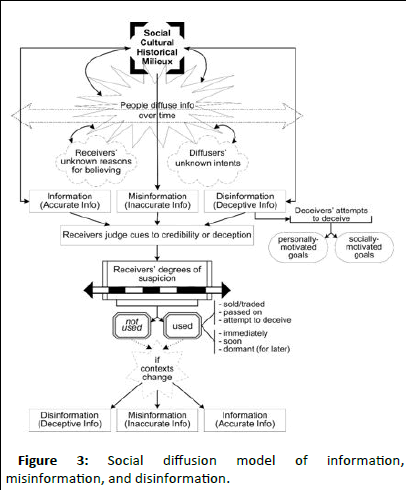
Figure 3: Social diffusion model of information, misinformation, and disinformation.
In Afghanistan, the role of the media in addressing misinformation faces significant challenges, particularly due to complex political issues and limited press freedom. Applying Michael Schudson’s model from why democracies need an unlovable press, Afghanistan could benefit from a press that critically meet power and examines misinformation highly. According to Schudson’s argument, essential characteristics like a focus on significant events, transparency in conflict reporting, and a skeptical situation toward political authorities help promote democratic discourse and counter the spread of falsehoods. However, Afghanistan’s media often struggle to adopt these approaches due to external pressures, safety concerns, and political interference, leading to a landscape where misinformation can improve.
This ideal model of journalism, rooted in the values of objective and independent reporting, would aim to better inform Afghanistan people, facilitate balanced discourse, and protect minority voices. Yet, Afghanistan media’s limited resources and frequent partisanship have ban its capacity to fulfill this role. As Schudson criticizes British media for its populism and biases that appeal to public prejudice, similar tendencies within some Afghan media outlets also pose threats to democratic principles. Instead of bring up unity and informed citizenship, these biases risk amplifying social divisions and reinforcing misinformation.
This paper provides insight into the significant obstacles that Afghanistan journalists face, especially in their efforts to verify information and combat misinformation. Let's break down and interpret each key finding:
Threat and violence: According to Reporter Without Border (RSF) 2024 world press freedom index, Afghanistan fell 26 spots to rank 178th in the world in 2024. Only a few Afghan media organizations operating abroad offer unbiased news coverage of the nation. Afghanistan journalists use the Internet and online sources to look for independent news coverage. In August 2023, RSF reported that the new government in Afghanistan had placed a number of limitations on the media industry and journalists. Up to 43% of Afghanistan media outlets disappeared and were forced to cease operations in just three months. Four out of ten journalists, or 4,360 persons, remained employed in Afghan newsrooms in December, out of 10,780 employees (8,290 men and 2,490 women) at the start of August (3,950 males and 410 women). Women have been disproportionately more affected than men; only one in two men (52%) have lost their jobs since the Taliban took over, while almost four out of five (84%) have. Afghanistan remains one of the world's most insecure countries for journalists, according to the RSF report. Other challenges faced by reporters include limited sources and difficulty accessing information.
According to the Taliban's acting deputy minister of information and culture and government spokeswoman, they have reformed the Afghan media sector and are considering establishing a Media Offenses Verification Commission. The Press Laws, which were passed in March 2015, were still in effect, the source added. One of the rights granted to journalists in Afghanistan was the law governing access to information. However, because of restrictions placed on the media and media workers, such as the need that women journalists wear masks and the prohibition against women going to universities and schools. These would make it impossible for women to work in media organizations and journalism.
Hasht-e-Shubh newspaper published an investigative report that Taliban’s efforts to spread disinformation and fake news in Afghanistan news. Numerous media publications have documented this misinformation, which has also been collated and consolidated.
Figure 4 highlights that the fear of violence limits journalists' ability to report the truth, underscoring a profound challenge in Afghanistan. The threat of violence not only silences critical voices but also discourages journalists from investigating or challenging misinformation, which can hinder the public’s access to reliable information.
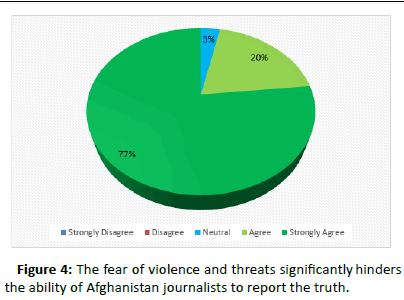
Figure 4: The fear of violence and threats significantly hinders the ability of Afghanistan journalists to report the truth.
Resource limitations: Strict censorship, safety concerns, and resource limitations make Afghanistan media extremely vulnerable to misinformation and disinformation in the current climate. The complexity of Afghanistan's political environment and the quick development of digital media make this worse. Widespread false headlines, the dissemination of unconfirmed material, and unbalanced reporting techniques are some of the factors that have significantly accelerated the spread of incorrect information, eroding public confidence and media credibility. UN experts alarmed by media outlet’s spreading of disinformation, The UN noted that Afghanistan International, a media organization, decided to conduct a smear campaign against a UN staff member and an invited Afghan woman speaker at a crucial June Human Rights Council meeting on the rights of Afghan women and girls. According to research done by Internews on comprehending Afghanistan's online misinformation and disinformation landscape, a lot of news articles have clickbait or deceptive headlines that don't match the content of the reports. Presenting unconfirmed information as fact is a serious issue since it breeds public suspicion. About 40% of fake news reports don't have any sources, and more than half just use one, which compromises the accuracy and thoroughness of the reporting. Because official media solely represent the Taliban's opinions and are run under their direction, emigration and the shift in governmental structures have left journalists struggling with a lack of news sources.
Afghanistan is not the only emerging nation dealing with the issue of rumors and misinformation; other nations have also suffered negative effects. The subject of misinformation has gained significant attention from academics in recent years due to its global urgency. However, the issue is not brand-new.
As illustrated in Figure 5, Approximately 80% of journalists in Afghanistan believe they lack adequate resources for verifying information prior to publication. This lack of resources, such as access to verification tools, funding, and staff, appears to be an outcome of Afghanistan's political instability, which has disrupted journalistic infrastructure and support systems. Only a small minority (13.7%) feel they have adequate resources, suggesting that resource scarcity is a widespread issue among journalists in the country.
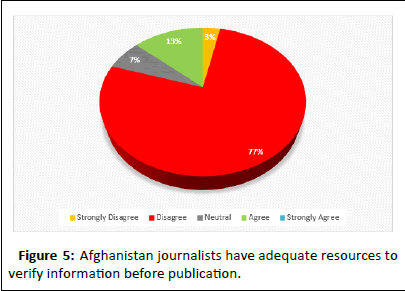
Figure 5: Afghanistan journalists have adequate resources to verify information before publication.
Importance of traditional media
An NGO that supports free media in Afghanistan, Nai, claims that since 2001, the country's journalism and media sector have grown exponentially, with 483 media outlets totaling 190 radio stations, including well-known stations like Ariana FM, Arman FM, Radio Afghanistan Public, and SalamWatandar FM. 96 television channels, including Aryana, Lemar, 1 TV, TOLO, and TOLO news, were very well-liked. Etilaatroz, 8 Subh, Afghanistan Times Daily, The Kabul Times Daily, and Mandgar were among the 183 print media outlets.
Figure 6 illustrates that over half (53.4%) of journalists view traditional media, such as radio and print, as essential for disseminating accurate information, while 46.7% disagree. This may reflect the trust that Afghan audiences still place in traditional media sources over newer digital formats, especially in rural areas with limited digital access.
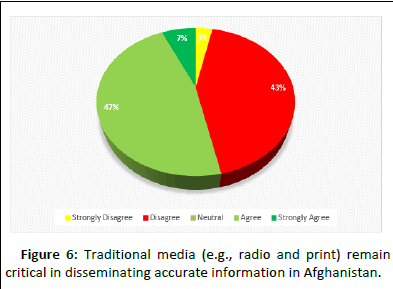
Figure 6: Traditional media (e.g., radio and print) remain critical in disseminating accurate information in Afghanistan.
Public engagement for verification
The Taliban regime has been urged by UNESCO to protect journalists' and media independence. While defending press freedom in Afghanistan, UNESCO also stood up for the rights of journalists to their personal freedom and safety as well as the right to free speech.
According to Figure 7, responses reveal a nearly even split on whether journalists engage with the public to verify information before publication. While 53.4% claim to do so, 46.6% refrain, likely due to concerns about political repercussions and personal safety. This caution demonstrates the difficult balance Afghan journalists must maintain in verifying information while navigating a politically sensitive environment.
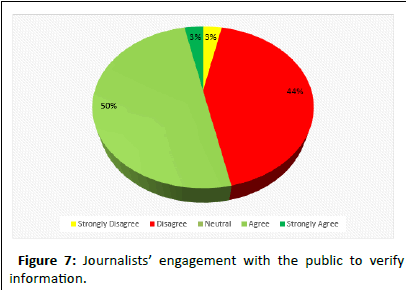
Figure 7: Journalists’ engagement with the public to verify information.
Internet access challenges and social media as a tool The number of active internet users in Afghanistan is more than 9 million.
Figure 8 shows that nearly all respondents (97.7%) highlight limited internet access as a barrier to verifying news and identifying misinformation. Given the internet’s crucial role in accessing diverse information sources and international factchecking resources, its limited availability restricts Afghan journalists’ ability to perform thorough fact-checking and may.
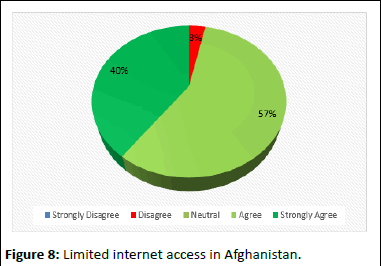
Figure 8: Limited internet access in Afghanistan.
The practice of journalism has evolved due to social media. Crowdsourcing material has emerged as a result of real-time audience participation, and even reporting chores like verification can now be delegated to the community, given that people feel misinformation is very common on social media, its importance as a source of news is even more critical during political campaigns. Disinformation is most prevalent on social media, according to 68% of internet users in all 16 nations, far more than on online chat applications (38%) and media websites/apps 20%. Opinions are divided on whether social media effectively supports Afghanistan journalists in fighting misinformation.
Figure 9 highlights that half of the respondents believed social media as a valuable tool, likely appreciating its immediacy and access to a wider audience, while the other half are less optimistic, perhaps due to the prevalence of unverified reports and misinformation on these platforms.
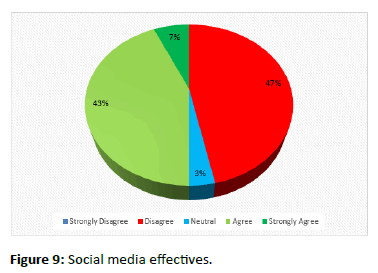
Figure 9: Social media effectives.
International collaboration
Sensational headlines and emotionally charged content are frequently used to boost engagement at the expense of factual truth. Misinformation can also spread quickly on social media by taking advantage of audience behavior. Afghanistan's media, especially those who rely on donor financing, find it difficult to strike a balance between the requirement for significant audience involvement and truthful reporting. According to Media Facilitating Organizations in 2023; many media outlets were facing closure and numerous journalists were facing unemployment. Protecting sources, depending on rumors, and the challenge of confirming statements on social media are some of the complex reporting dynamics in Afghanistan. Even if some media sites make an effort to employ a variety of sources, fact-checking and upholding journalistic integrity continue to be difficult tasks.
They highlighted the difficulties experienced by Afghan journalists, citing financial barriers as one of the main barriers to their continuous operation. The lack of precise information and trustworthy sources for Afghan journalists is another problem. There is unanimous agreement on the positive impact of collaboration with international media organizations for enhancing journalists' ability to combat misinformation. Figure 10 illustrates participant responses nearly all Afghanistan journalists believe that international partnerships can provide much-needed resources, training, and access to verification tools, creating a buffer against misinformation.
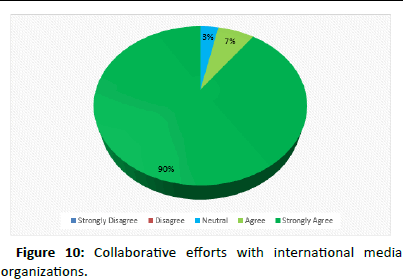
Figure 10: Collaborative efforts with international media organizations.
Training necessity
A vast majority (93.4%) agree on the need for training programs focused on combatting misinformation. Such programs could bridge skill gaps in fact-checking, information sourcing, and digital literacy. The high percentage underscores an awareness among journalists of the role that training can play in strengthening their profession.
According to Figure 11, the unanimous agreement on the benefits of joint training programs for investigative journalism and fact-checking demonstrates a strong collective will to build a more resilient and capable media sector. Such programs could empower journalists to report more accurately and critically.
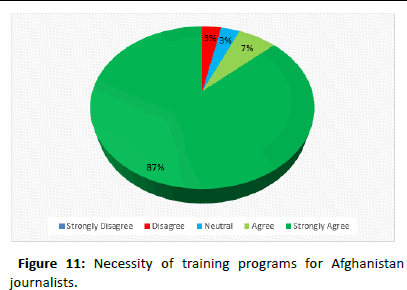
Figure 11: Necessity of training programs for Afghanistan journalists.
At the end 2022, many Afghanistan journalists launch a factchecking website (Afghan Fact). IJnet had an interview with journalist who work for that website, focus is Afghanistan. According to interview they said we pick certain reports or quotes to work on. Three journalists work for that website, each of whom peer-edits and confirms the work of the others. After reviewing the gathered information, an editor assigns a rating to the report or quotation. The report is rated according to its level of veracity and assigned one of the following labels: Accurate,semi-accurate, inaccurate, not entirely believable, exaggerated, or totally false.
According to content analysis of fact cheeking website (Afghan Fact) that established in 2023 by a group of Afghanistan Journalists for verification news of Afghanistan media. The Afghan fact website follow falls news from Media news, Government authorities and social media, the website highlighted propaganda and misinformation have been increased in Afghanistan media. That site reported several misinformation specially that news reported from Afghanistan government.
Table 1 presents data on the frequency of fake news and false information across different categories and time periods from January 2023 to October 2024.
| Category | Time period | Numbers fake/sfalse information |
| Fake news on media | February 2023 to October 2024 | 24 articles |
| Fake news on social media | February 2023 to October 2024 | 18 articles |
| Government authorities’ false information | January 2023 to October 2024 | 14 false information/ speech |
Table 1: Number of fake/false information according Afghan fact website.
Fake news on media: There were 24 articles identified as fake news in traditional media (newspapers, TV, etc.) during this period (February 2023 to October 2024).
Fake news on social media: There were 18 articles or posts identified as fake news circulating on social media platforms from February 2023 to October 2024.
Government authorities' false information: There were 14 instances of government authorities disseminating false information or delivering misleading speeches between January 2023 and October 2024.
The website also pointed that government always effected and controlled to Afghanistan media and news websites. The difficulties faced by media organizations that operate outside of Afghanistan are distinct. Inadvertent misinformation and deception are frequently caused by the nation's harsh restrictions on media freedom and lack of transparent information.
In conclusion, Afghanistan’s media landscape has undergone profound changes since the Taliban's takeover in August 2021, intensifying the battle against misinformation. The decline in press freedom and the closure of numerous media outlets have severely affected journalists and their ability to deliver accurate news. Although Afghanistan's media sector grew vibrantly in the early 2000’s, severe threats, economic hardships, and a sharp decrease in the number of active journalists now characterize the current environment. Accessible, accurate, and relevant information is the first line of defence against misinformation. However, Afghan journalists face numerous challenges in meeting this need. Limited resources, restricted internet access, and a lack of training in fact-checking techniques exacerbate the spread of misinformation. Government control over media and reliance on propaganda have further undermined the credibility of news sources, making it difficult for the public to discern fact from fiction. While some media outlets and fact-checking websites continue to strive for accuracy, their efforts are often hampered by the political climate and security concerns.
The data reveals a troubling prevalence of fake news across various platforms. Traditional media recorded 24 instances of fake news, indicating that misinformation is not confined to unregulated online platforms but also affects formal news outlets. Social media, with 18 cases of fake news, continues to serve as a major vector for spreading misinformation, though slightly less so than traditional media in this dataset. This discrepancy may reflect the comparatively higher scrutiny that traditional media sometimes faces compared to the rapid, often unmoderated spread of content on social media. Additionally, 14 cases of false information originating from government authorities add another layer of complexity, as government statements might be presumed credible by default, potentially leading to significant public impact and confusion. This raises concerns about public trust and accountability, underscoring the importance of independent verification in journalism.
With misinformation emerging from both media sources and government, Afghan journalists face an increased burden of factchecking and maintaining credibility. The need for quick reporting, especially in digital journalism, compounds this challenge and can sometimes limit the depth of verification. These findings highlight an urgent need for improved media literacy among the public to discern reliable information from false narratives, particularly on social media, where misinformation can spread rapidly and make corrective efforts difficult. Educational initiatives targeting both media consumers and journalists are essential to fostering critical thinking and responsible media consumption.
To address these pressing issues, there is an urgent need for enhanced training programs, more resources dedicated to verification, and greater support from international media organizations. The resilience of Afghan journalists in the face of adversity is commendable, but overcoming the current challenges requires concerted efforts to improve access to information, foster public engagement, and safeguard the safety and freedom of the press. As the situation evolves, sustained support for Afghan journalists and their fight against misinformation will be crucial in promoting a more informed and resilient society. This comprehensive study emphasizes the necessity of targeted interventions to address these challenges and uphold the integrity of journalism in Afghanistan.
The study suggests developing programs for fact-checking, encouraging digital literacy, and using ethical journalistic techniques. Balance, audience involvement, and transparency are crucial for media enterprises. Donors should, in the meanwhile, give independent media funding top priority, make technological investments, and encourage capacity building and cooperative reporting projects.
[Crossref] [Google Scholar] [PubMed]
Copyright © 2026 Global Media Journal, All Rights Reserved

 +44-330-822-4832